What I Mean by Lock In
What I Mean by Lock In
We have buzzwords, and in recent times the word "lock-in," which meant restriction of movement in the 16th–17th century and intense focus during the 1990s hip-hop era, has now joined their ranks. Despite this new reality, it brings inspiration, and I think that is a good buzzword if you ask me. I am writing this to tell my story, which I now think I should do more often. This is the story of how I transitioned fully into a technical skill in tech from a 9–5 that only brought me pressure at the time. But what do they say about pressure? It forges us, which is why I will forever cherish my time spent at the company Agrific under Valentine Akponor.
Now to it. I promised my followers on Twitter a story, and here it is.
Fresh out of Uni in 2020, I promised myself I would not work for anyone. I wanted to be a tech entrepreneur, greatly inspired by Mark Zuckerberg at the time. How ignorant of me! I decided to stay back in Ile-Ife, where I completed my undergrad at Obafemi Awolowo University, in a single-room apartment with my friend Ajisegiri (what I hated most about our living condition then was the toilet). Shortly after we had settled into this apartment, COVID-19 came and then the lockdown. Months before that, I had reached out to a student in my school to get guidance on how to learn UI/UX design with Adobe XD, which was the go-to design tool for the skill at the time. Thanks to his succinct answer, I started learning on my Dell E6430. Whenever I ran Adobe, I could have as well multitasked by using the heat generated to cook noodles. This led me to abandon it for a little bit of front-end, then I jumped to Python, which I learned for about 6 months off and on.
It was in between my learning front-end and Python that I got a job at Agrific.
Agrific was my first real job after leaving campus, and Valentine Akponor was the kind of boss who expected results, not excuses. My role was non-technical (Business Development) but the environment was pure tech startup chaos. Every day felt like I was drowning in tasks I barely understood, surrounded by developers and product people speaking languages I was still learning. It wasn't glamorous. It was pressure.
But here's what that pressure did for me: it showed me what I didn't want to do, and more importantly, it showed me who I wanted to become. While pushing spreadsheets and chasing leads, I watched the designers and developers build things. Real things. Things people would use. And I felt the ache of wanting to be on that side of the table.
That ache was my first sign. And if you're reading this trying to figure out what to lock into, let me tell you: pay attention to your aches. Not your fleeting interests. Not what's trending on Twitter. The thing that makes you feel left out when others are doing it? That's your clue.
What locking in actually means
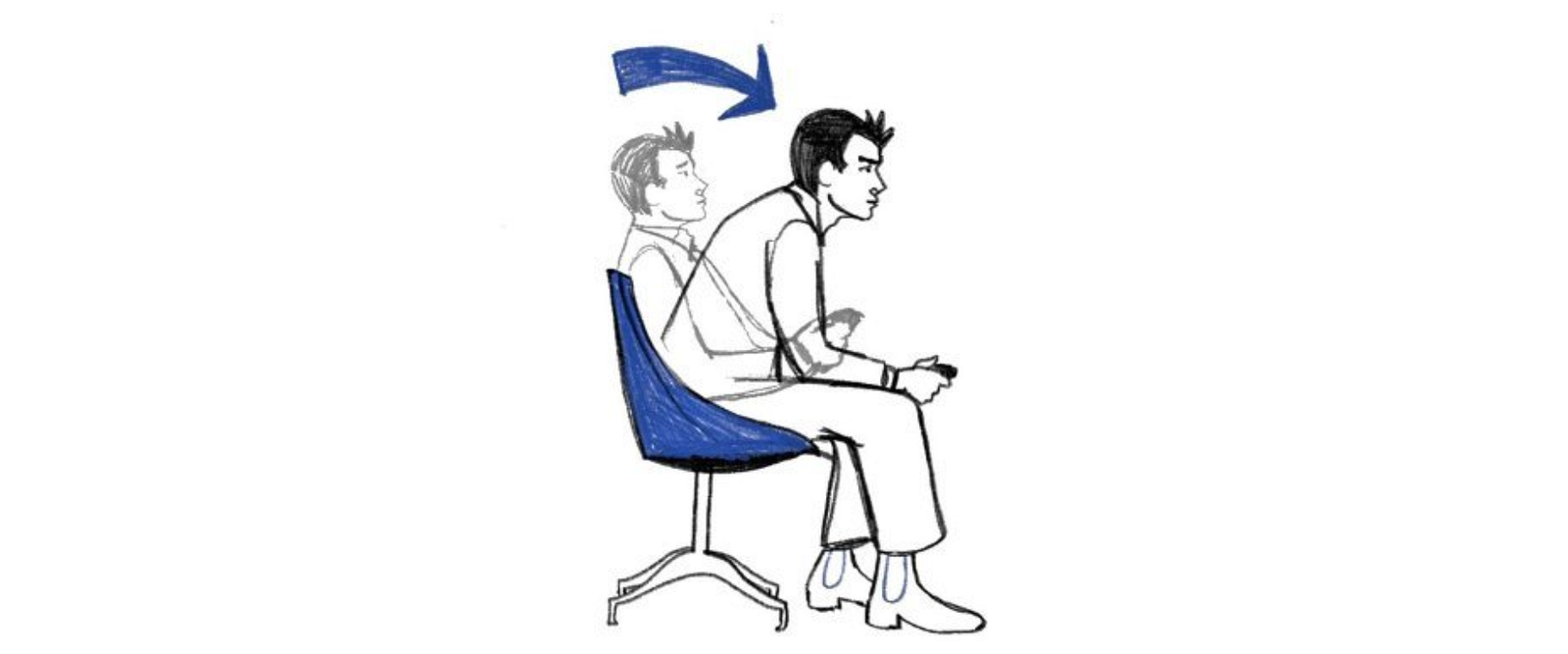
Locking in is not motivation. Motivation is the spark that gets you to download a course at 2am. Locking in is what happens six months later when the spark is gone and you're still showing up.
Before Agrific, I was a dabbler. One week Python, next week HTML, then abandoning everything when my laptop overheated. I was interested in tech, but I wasn't locked in. The difference? Dabblers collect skills. People who lock in build identities.
When I finally chose product design, something shifted. I stopped saying "I'm learning design" and started saying "I'm a designer." The work hadn't changed. I was still struggling, still Googling basic things, still producing mediocre output. But the commitment had changed. And commitment changes everything.
How to lock in: what worked for me
I found ADPList, a platform that connects designers with mentors for free. In three days, I spoke with three different mentors, and they all asked the same question: "What have you done so far?" They wanted to see work, not wishes. They wanted to pick me up from the cradle, not the birth bed.
That question, "what have you done so far?", is the lock-in test. If you can't answer it, you're still dabbling.
So I started designing. Every day. On whatever device I could access, with whatever power supply I could find. My first full case study was on Treepz, a shared mobility app I had been researching. I published it in late 2021, four months after I started teaching myself product design. It wasn't perfect, but it was proof.
Here's what I learned from that season that might help you:
1. Pick one thing and let the others die
This is the hardest part. When you're starting out, everything looks interesting. Front-end, back-end, design, data science: they all promise a good life. But locking in means choosing one path and mourning the others. You're not closing doors forever; you're just choosing which one to walk through first.
I learned HTML, CSS, and Python before settling on design. Those skills didn't disappear. They became my horizontal bar. But I only grew when I chose a vertical. I wrote more about this in The Generalist: Someone AI Can't Replace.
2. Find your zone
During the pandemic, I met a young developer who learned back-end by sitting in his street mosque for 12 hours daily, just to use their power supply. His laptop had no battery. He had no fancy setup. But he had a place that gave him what he needed to show up consistently.
Your zone might be a library, a friend's house, a co-working space, or a corner of your office after hours. Find it. Protect it. Show up there so often that the walls start to recognise you.
3. Publish before you're ready
My Treepz case study was not good by any professional standard. But publishing it did something that perfecting it never could: it made me accountable. Once your work is out there, you can't pretend anymore. You're in the arena.
Don't wait until you're "ready." Ready is a lie dabblers tell themselves. Publish the rough draft. Ship the ugly prototype. Let the world see your beginner work so you have something to improve on.
4. Get around people who are already there
There's a quote I love from Adewale Yusuf: "If you hang around the barbershop long enough, sooner or later, you are going to get a haircut." That was his journey to tech, attending every meetup, every launch, every conference.
Community is not optional. Whether it's a WhatsApp group, a Twitter circle, or a physical meetup, find people who are doing what you want to do. Their conversations will teach you things no course will. Their progress will pressure you to keep moving. Benjamin Dada's blog has a good list of tech communities in Nigeria if you're looking for where to start.
5. Let the pressure shape you
This is the part nobody wants to hear. Locking in is uncomfortable. There will be days when you feel stupid. Weeks when you see no progress. Moments when you wonder if you chose wrong.
That discomfort is not a sign to quit. It's a sign that you're growing. Pressure only breaks people who resist it. For everyone else, it's a forge.
The payoff
I'm writing this as a Product Design Lead now, having built Figma plugins used by over 50,000 designers. But I'm also writing this as someone who remembers cooking imaginary noodles on a Dell E6430, who shared a room with a toilet he hated, who took a job that crushed him just enough to show him the way out.
The buzzword version of "lock-in" sounds motivational and light. But the real thing? The real thing is a decision that changes your identity. It's saying, "This is what I'm going to be good at," and then enduring the long, unglamorous process of becoming that person.
If you're in that scattered season, the "I'm learning five things and mastering none" season, I have one thing to tell you: pick one. Lock in. Not because the other paths are bad, but because you can only walk one at a time.
The pressure will come. But so will the breakthrough.